A multi-generational industrial services provider sold its buildings
A multi-generational industrial services provider was selling its business and the buildings the business occupied. Rather than using a local real estate broker or selling it to the buyer of the business, the property was sold for a significant premium to a net-lease investor while the company kept operating in the same facility, completely uninterrupted.
Two assets wearing one set of books.
A multi-generational industrial services provider has operated in the Northeast US for decades. It ran its operations out of a facility it owned, and its CEO had built the company to the point where a sale made sense.
The buildings were owned by a sibling entity and were also being sold. That is how nearly every owner-operator has historically approached it. The company and the real estate have always gone together, so they are often sold together. That default is where value quietly leaks out.
A business and its facilities are really two independent assets held together. The first is an operating company, and the second is a piece of income-producing real estate whose only tenant is that operating company. The company either occupies the space rent-free, or pays itself off-market rent, because they are their own landlord.
Those two assets are not valued at the same multiple, and it is not close. An operating business is priced on its earnings and its risk. Single-tenant industrial real estate on a long lease is priced as an income stream, and income streams like that typically trade at higher multiples than most middle-market businesses. When the building is included in the business sale, often its value is priced based on the business's EBITDA or earnings multiple rather than the real estate's.
In a standard process no one goes looking for the difference, because the real estate never gets priced on its own terms.
A building about to be sold at the wrong multiple.
In December of 2025 we spoke with Mark Crouch of TrueNorth Capital Partners, who was advising the seller on the sale of the business. The seller was also willing to include the real estate, however the business buyer only wanted the business.
We introduced the sale-leaseback approach: sell the real estate to an entirely different buyer who would value it on its own merits. In discussions with Mark, the business owner had been advised the building was worth $7.5-8.0M. We told him we pay over $12M, which was $4-5M above the seller's expected value. Though he had never done a sale-leaseback before, Mark, a senior banker, immediately understood why our price was so much higher.
Many advisors would have carried the deal to close as it was structured, so as not to create waves with the M&A transaction. He recognized the arbitrage between a business multiple and a net-lease cap rate, understood what selling the real estate separately would mean for his client, and moved on it. After conferring with the seller, the parties agreed to run two simultaneous transactions, an operating company sale and an entirely separate real estate sale.
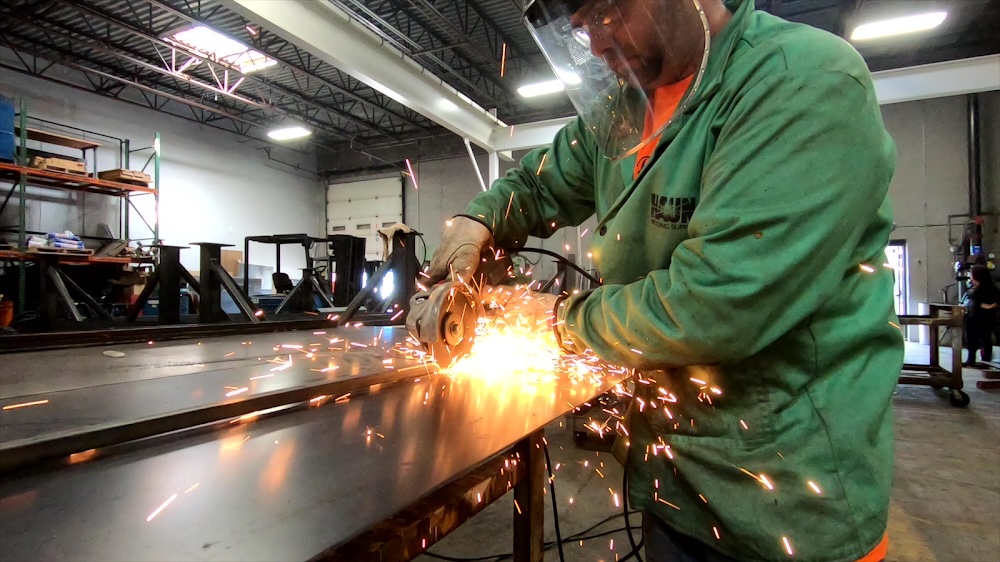 Northeast US. The facility the company has operated from for decades.
Mission-critical real estate is an asset, not a liability.
There is a common misconception that a purpose-built or operation-specific facility is harder to sell, because fewer future tenants could use it. Read a different way, that same fact is a strength.
We invest in properties where the real estate is critical to how the business operates. A company that depends on its building to do its work is a company that stays, pays, and honors a long-term lease, because leaving is not a practical option. That is exactly the profile a net-lease investor wants: a stabilized, long-term tenant in a property it genuinely needs. What looks from one perspective like specialization risk, from an alternate perspective, is tenant durability. This is a win for the seller, who earns a premium price, and a win for the investor, who gains a dependable tenant.
Same building, two very different prices.
By May of 2026, mutually-agreed terms had been reached on the operations entity, and the real estate sale was ready to proceed. In early July we received a signed letter of intent and introduced the opportunity to our closest investor relationships. We selected the partner we believed fit the opportunity best.
To expedite the process, real estate due diligence reports were ordered at the same time as the real estate underwrite, so the real estate process moved in parallel with the business sale rather than behind it. After receiving a clean set of due diligence reports, lease negotiations were finalized and the purchase and sale agreement was signed. The deal closed on Friday, August 7, 2026.
The real estate sold for $12.6 million at an 8.67% capitalization rate, had a twenty-year lease, fixed annual rent escalations, and multiple renewal options. The operating business was sold to the Texas family office with our lease in place. The seller realized true market value for the real estate from a buyer who values long-dated single-tenant assets, while the company continued to operate exactly as it had before, completely uninterrupted.
The difference in the approach to valuing these two assets is why this works. Bundled into the business sale or sold to the wrong type of buyer, the building would have been sold close to the business sale multiple. Separated, it went to a specialized net-lease investor who paid more for that income than an operating-company buyer ever would. Same building, two very different prices, decided entirely by who was buying it and their strategy for the asset.
Same building, two very different prices, decided entirely by who was buying it and their strategy for the asset.
Run in parallel with the business sale, not behind it.
- Dec 2025Introduced the sale-leaseback approach to the advisor. The business sale, real estate included, was already headed to a family office.
- May 2026Mutually-agreed terms reached on the operations entity. The real estate sale was ready to proceed.
- Jul 2026Signed letter of intent received. We introduced the opportunity to our closest investor relationships and selected the buyer that fit it best.
- Jul 2026Due diligence reports ordered alongside the real estate underwrite, so the real estate process ran in parallel with the business sale.
- Aug 2026Lease negotiations completed and the purchase and sale agreement signed.
- Aug 7, 2026The real estate sale closed.
We appreciate the CRE Demand team's role in the acquisition our client's industrial property. Their ability to connect the right capital partner was instrumental in bringing this opportunity to a successful conclusion. We value their industry relationships, market knowledge, and professionalism and look forward to working with them on future opportunities.
When separating the real estate is the right move.
- The business owns the facility it operates from.
- The real estate is fungible and can be used by a future tenant after reasonable renovations.
- The business financials can comfortably support market rent.
- The decision is made early enough to run the real estate process alongside the business sale.
- The building is needed by the business to generate revenue.
- The tenant is willing to sign a long-term lease.
- Neither the business nor a related entity owns the facility. There is nothing to separate.
- The owner wants to keep the building as a long-term income stream. That is a different transaction, with its own risks and implications to understand.
- The business is already under contract with the building inside it. The real estate has been priced at the business multiple and the chance to separate it is gone.
- The building is a cost center, such as an office building.
- The tenant is not willing to sign a long-term lease.
There are two transactions in that engagement, not one.
If your client owns its building, there are two transactions in that M&A engagement, not one. The second one exists whether or not anyone monetizes it. This deal is what it looks like when someone does, and it happened without disrupting the business sale already underway. If you have a client who owns its facility, we will value the real estate on its own and tell you what it is worth outside the business, at no cost and no obligation.